Trace metals in microbial metabolism and evolution
Small amounts, large effects
Carbon, hydrogen and oxygen build cells. Rarer elements make them work. Iron, copper, nickel, zinc, molybdenum and tungsten sit at the active sites of enzymes that move electrons. In the ocean these metals are often scarce, and their supply limits which organisms thrive and which reactions proceed (Morel & Price, Science 2003). Much of the open ocean is sparsely populated because it lacks a few such elements, not because it lacks water or light (Anbar, Science 2008).
The metal inventory has also changed through time. As oxygen rose, iron and manganese fell in seawater, while copper, molybdenum and zinc became more available. Those shifts shaped metabolism. Declining nickel in the Archean ocean may have starved methanogens, which need nickel for their key enzyme, and helped make way for oxygen (Konhauser et al., Nature 2009). Metal-containing enzymes therefore preserve a record of the environments in which they evolved.
Metals steer greenhouse gases
Metal supply directly shapes the gases microbes release. The enzyme that destroys N₂O requires copper. When copper runs low, denitrifying bacteria make less of this enzyme and release more N₂O (Sullivan et al., PNAS 2013). The metal content of an environment therefore partly determines its gas output.
In Proterozoic oceans, sulfide was thought to strip copper from seawater, shutting down microbial N₂O consumption and turning the ocean into a large N₂O source. We revisited this view. Gene transcripts for N₂O reductase are abundant in today's sulfidic waters, including the Black Sea and Lake Cadagno. In culture, a purple bacterium kept reducing N₂O at sulfide levels well above those estimated for Proterozoic seawater. Speciation modeling shows that copper stays available as a dissolved copper–sulfide complex. Proterozoic N₂O emissions were likely lower than previously proposed.
A microbe that needs tungsten
In a Nevada hot spring, we cultivated Wolframiiraptor gerlachensis from the long-uncultured archaeal lineage Caldarchaeales. It grows only when tungsten is available. Its genome encodes tungsten transporters and tungsten-dependent ferredoxin oxidoreductases, and these enzymes are expressed as it breaks down sugars. Single-cell imaging with nanoSIMS showed that it prefers xylose. Tungsten is rare in most biology, but here it sits at the core of carbon metabolism. Across 78 genomes from hot springs and hydrothermal vents, tungsten enzymes trace back to the common ancestor of the Wolframiiraptoraceae, suggesting a relic dependence on tungsten in early anaerobic thermophiles.
Tracing enzyme ancestry
Genome sequencing keeps revealing enzyme versions that standard markers miss. Many microbes carry N₂O reductase genes that are evolutionarily distinct from those of classic denitrifiers (Sanford et al., PNAS 2012). Each new branch raises the same questions: when did it arise, and under what chemistry? To answer them, I combine experiments with phylogenetic tools:
• Gene tree–species tree reconciliation to detect gene gains, losses and transfers
• Ancestral state reconstruction to infer what early lineages carried
• Protein structural modeling with AlphaFold2 and AlphaFill to predict metal-binding sites and stability
For N₂O reductase, reconciliation showed that archaea acquired the gene relatively late, from a bacterial clade II branch. Thermophilic and halophilic versions of the enzyme proved exceptionally stable in structural models. Our cultured methanogen confirmed that a highly divergent methane-forming enzyme functions, a lesson for other archaeal lineages known only from genomes.
Metals at the extremes
In Antarctic Lake Untersee, N₂O-reducing microbes carry genes for copper acquisition and sulfide detoxification. In acidic, hypersaline lakes of Western Australia, collaborative work points to microbial mercury reduction and multi-metal resistance. My research measures intracellular metal stoichiometry by ICP-MS to test how metals limit habitability and which gases life emits at extreme sites.
Open questions
• Did tungsten enzymes precede their molybdenum counterparts, and did tungsten run anaerobic carbon metabolism in early oceans when molybdenum was scarce?
• Was tungsten the metal switch for energy metabolism in other anaerobic archaea, beyond the lineage in which we found it to be essential?
• How did copper-dependent N₂O reductase spread relative to the rise of oxygen?
• Which other trace metals were once central to life and have since been replaced by metals more abundant on the modern Earth?
• Can measured cellular metal stoichiometries replace Redfield-ratio assumptions for microbes in extreme environments?
Cited: Morel & Price, Science 300, 944 (2003) · Anbar, Science 322, 1481 (2008) · Konhauser et al., Nature 458, 750 (2009) · Sullivan et al., PNAS 110, 19926 (2013) · Sanford et al., PNAS 109, 19709 (2012)

Anaerobic archaea require the trace metal tungsten for growth (Nature Communications, 2022).

Tungsten is essential for energy metabolism in novel hot spring archaea (Nature Communications, 2022).
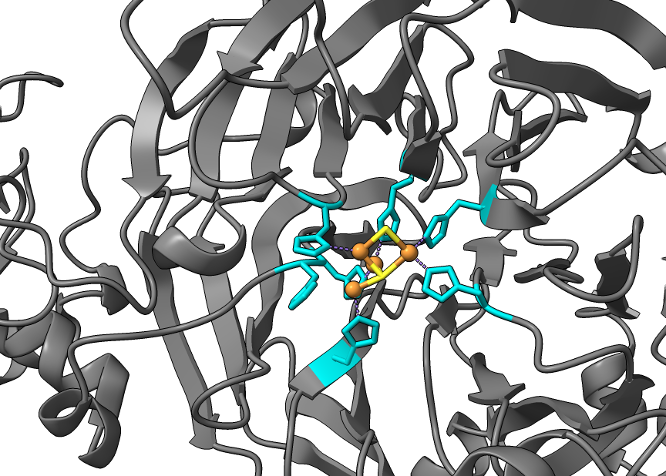
Pseudomonas stutzeri nosZ (clade II) based on the crystal structure (Geobiology, 2026).
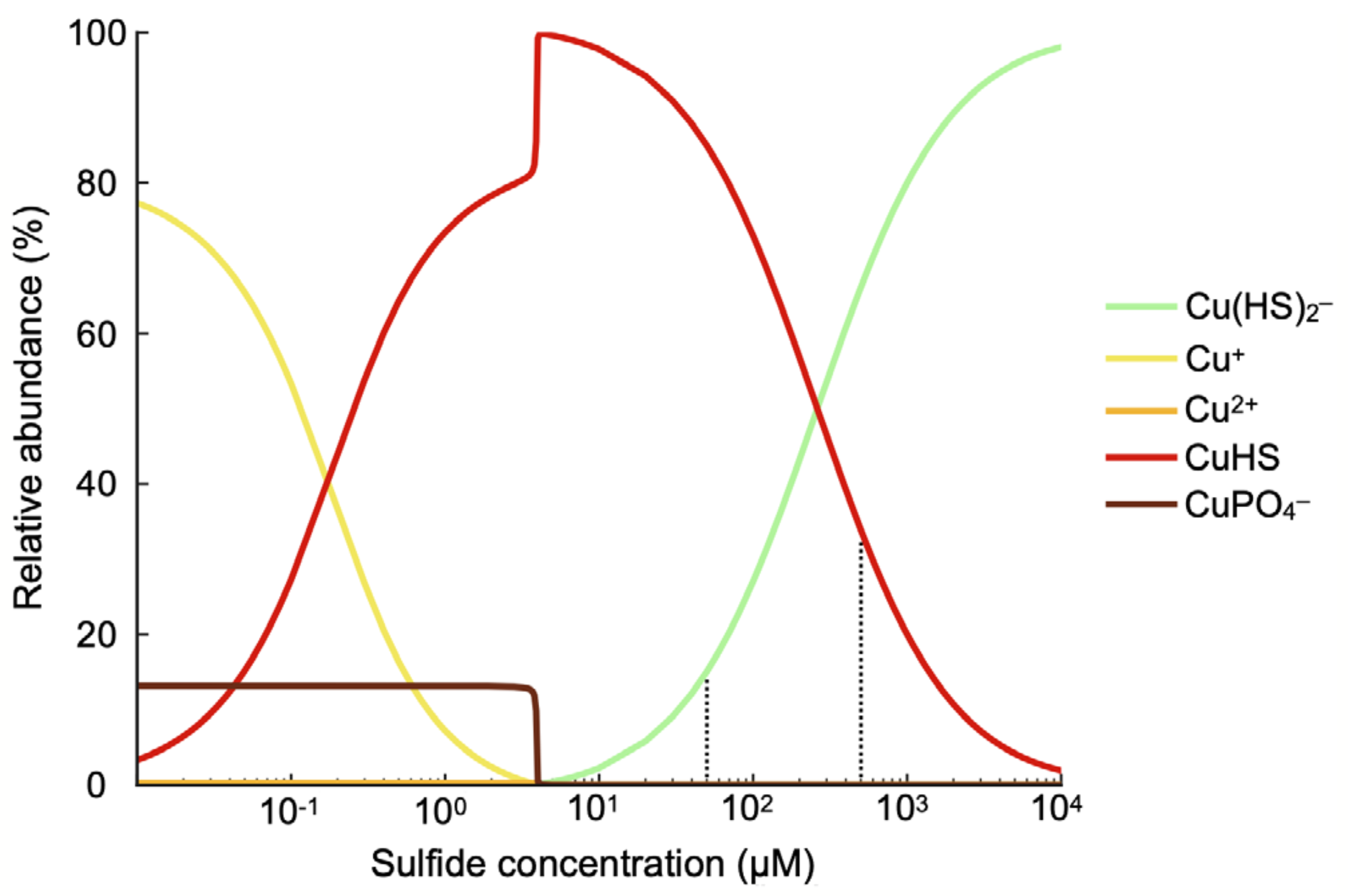
Modeled Cu speciation in sulfidic Proterozoic seawater (Geobiology, 2026).
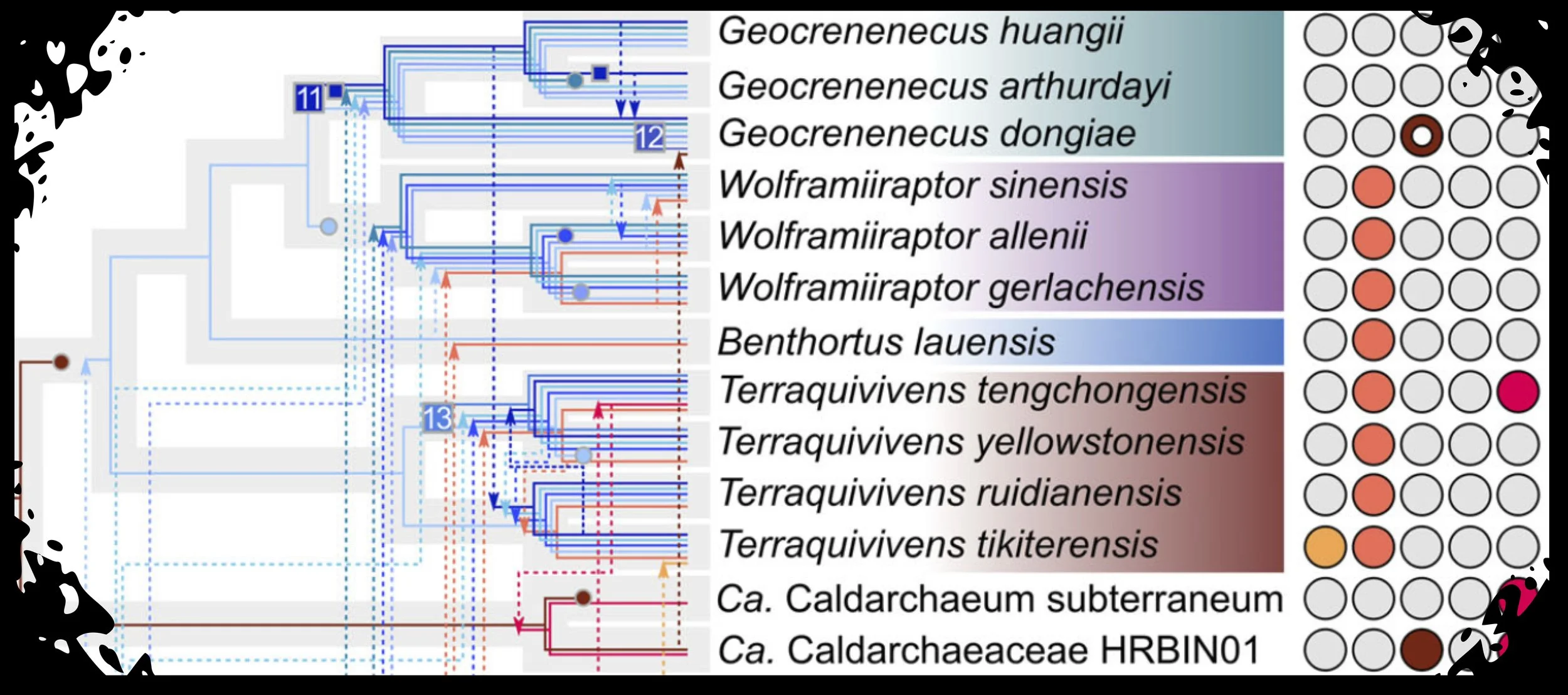
Evolution of tungstoenzymes in hot spring archaea (Nature Communications, 2022).
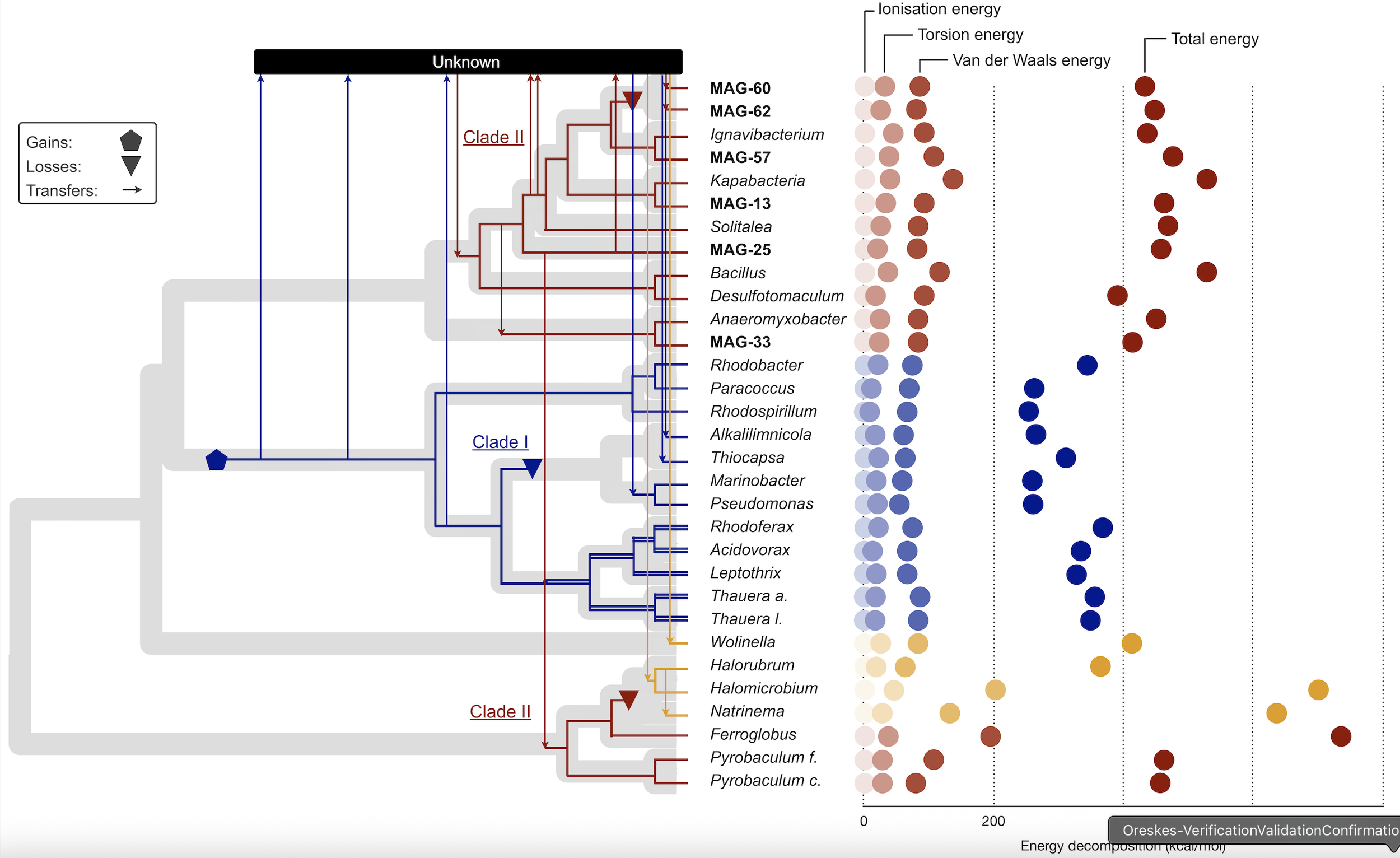
Evolution of nitrous oxide reductases – shown with protein biochemical energies (Astrobiology, 2026).