Biotic vs. abiotic chemistry in natural systems
Chemistry that looks like life
Microbes run Earth's element cycles. Over billions of years they took control of the nitrogen cycle, turning nitrogen gas into biomass and back again (Canfield et al., Science 2010). Many of the same reactions also happen without enzymes. Dissolved iron and iron minerals can reduce nitrite to nitric oxide (NO) and nitrous oxide (N₂O), the same gases that denitrifying bacteria release. Chemists call this chemodenitrification.
The reverse also happens: biology can imitate chemistry. One methane-eating bacterium splits NO to make its own oxygen in complete darkness (Ettwig et al., Nature 2010). Whether nitrate ends up as gas or as ammonium depends on environmental conditions as much as on which microbes are present (Kraft et al., Science 2014). In nature, enzymatic and mineral reactions overlap.
Why the line matters
Telling the two apart has consequences:
• Climate budgets. Emission models assign N₂O to microbes. Abiotic sources shift that accounting.
• Early Earth. Before enzymes existed, minerals may have supplied the first reactive gases.
• Life detection. A gas counts as evidence for life only once its abiotic sources are ruled out.
A mosaic in tropical peat
My doctoral work began in the peatlands of the Amazon basin. These soils are among the largest and most variable N₂O sources on Earth. Using sterilization controls and isotope tracers, we found that up to 98% of N₂O production in these waterlogged, iron-rich soils was abiotic. Production rose with extractable soil iron. Microbes then consumed much of that N₂O, led by diverse clade II N₂O reducers. Abiotic production and biological consumption together form a coupled cycle: denitrification here is a mosaic of mineral and enzymatic steps, not a purely biological pathway. Nitrogen oxides in these soils also reshaped the microbial community and suppressed methane formation.
Rust on the early seafloor
I took the same question back roughly three billion years. In lab simulations of the iron-rich Archean ocean, the iron minerals green rust and magnetite reduced nitrite to NO and N₂O at rates comparable to enzymes. Nitrate stayed inert. With green rust, 63% of nitrite nitrogen escaped as N₂O, and some NO remained bound to mineral precipitates. Coupled diffusion and photochemical models suggest that this process sustained 0.8 to 6 parts per billion of atmospheric N₂O, even without an ozone layer. Abiotic denitrification could therefore have operated globally and given early microbes new electron acceptors to evolve around. Related work with collaborators shows that NO can inhibit iron-based photosynthesis in ferruginous waters.
Open questions
A gas counts as a biosignature only once its abiotic sources are ruled out. My research quantifies those non-biological baselines for the gases at the center of exoplanet and planetary life detection:
• How much O₂ can minerals produce without photosynthesis? Reports of "dark oxygen" forming among deep-sea polymetallic nodules make this a measurable question on Earth.
• Water–rock reactions and microbes both make CH₄. Which conditions separate them, and do isotopes reliably tell them apart?
• Iron minerals make N₂O at enzyme-like rates. Can N₂O remain a credible sign of life on iron-rich worlds?
• On Earth, DMS comes almost entirely from marine life. Are there abiotic routes that could produce it on other worlds?
• Methyl chloride, phosphine, ammonia and isoprene. Each has been proposed as a biosignature gas. Their abiotic sources under high pressure, high salinity or anoxic conditions remain poorly constrained.
Cited: Canfield, Glazer & Falkowski, Science 330, 192 (2010) · Ettwig et al., Nature 464, 543 (2010) · Kraft et al., Science 345, 676 (2014)

A "mosaic" of abiotic and biotic reactions in tropical soils (Nature Ecology & Evolution 2022).

Proposed abiotic cycling of nitrogen on the early Earth (Nature Geoscience, 2022).
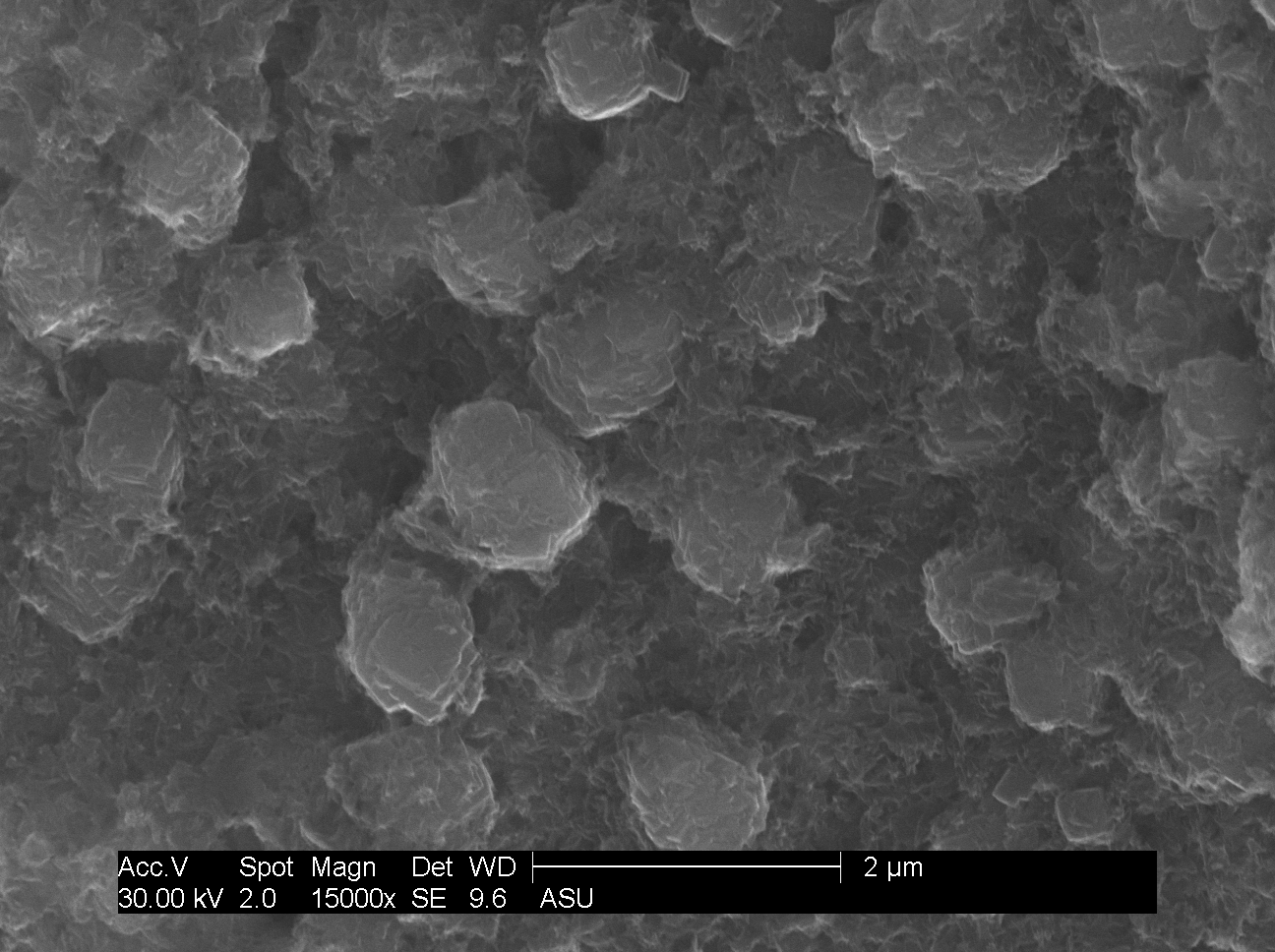
Green rust particles on a micron scale (Nature Geoscience, 2022).
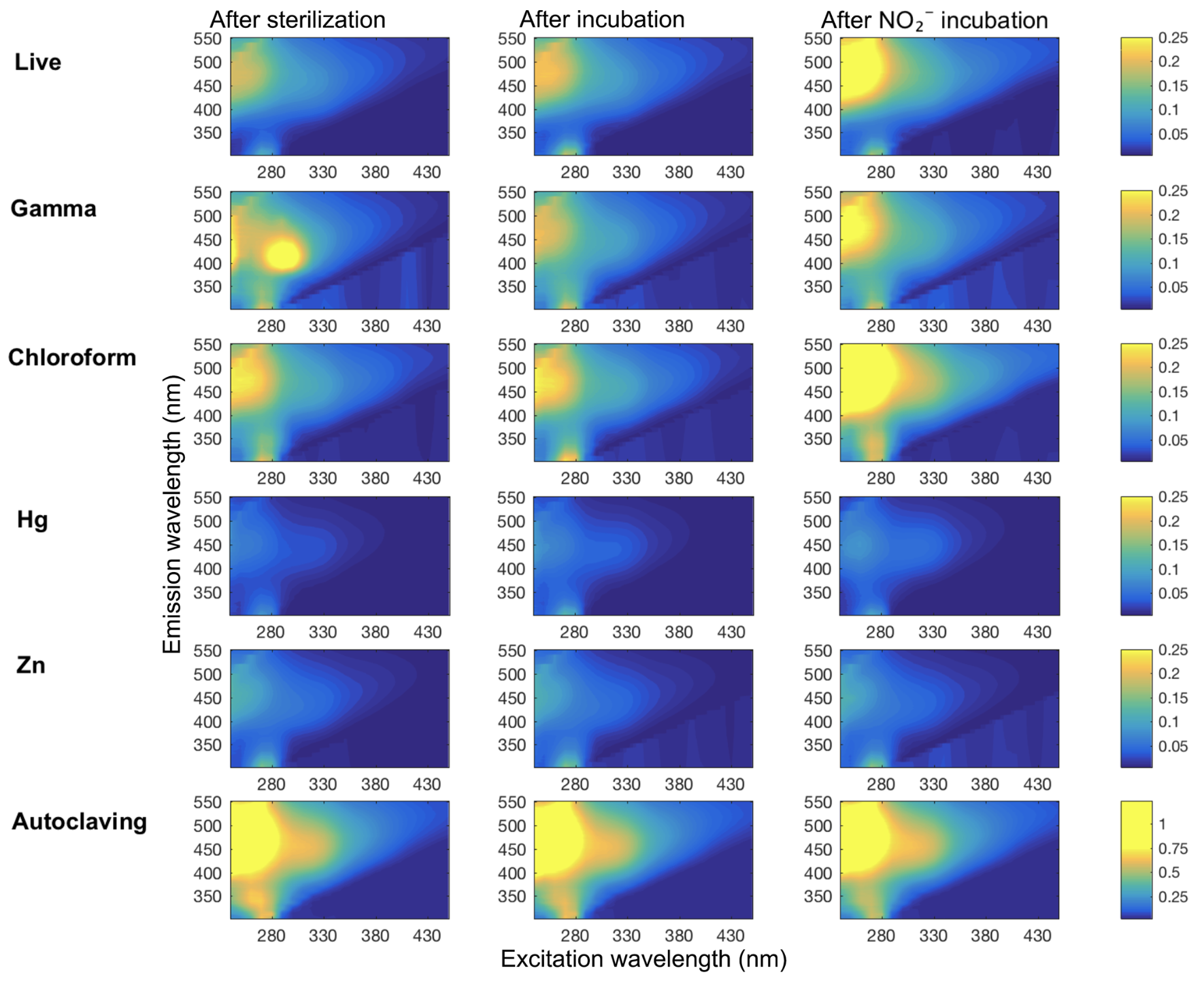
Sterilization techniques differently affect organics in soils (Biogeosciences, 2019).