Gas signatures of extreme environments
Reading metabolism in the air
Microbes leave traces in the gases around them. Methane, N₂O and hydrogen rise and fall with microbial activity, so gas fluxes record metabolism in real time. These signals often come from unexpected sources. Methane, long linked to oxygen-free settings, also forms in the oxygenated ocean when microbes break down methylphosphonate (Metcalf et al., Science 2012).
Hidden consumers
Producers are only half the story. Soils contain a large, overlooked group of N₂O reducers. Their genes differ from those of classic denitrifiers, and they consume N₂O without making it (Sanford et al., PNAS 2012). Methane-oxidizing archaea in deep-sea sediments keep working when artificial electron acceptors replace their bacterial partners (Scheller et al., Science 2016). A measured gas flux is the net of production and consumption, and both can be flexible.
Methane from a hot spring
From a terrestrial hot spring, we enriched Methanoglobus nevadensis, a member of the Archaeoglobaceae carrying an unusual methane-forming enzyme. Its methane production stopped when the enzyme was inhibited, rose with sugars derived from plant polysaccharides, and consumed hydrogen. The methane's isotopic fingerprint matched that of known methanogens. Archaea with similarly divergent enzymes may be overlooked methane sources in hydrothermal systems.
Gases as a measure of habitability
A gas that is produced and then consumed is evidence of an active metabolism. Where microbes take up a gas as quickly as chemistry or other organisms supply it, the environment holds both an energy source and a community able to use it. Gas fluxes therefore measure habitability directly: they show not only that conditions could support life, but that life is working there. Extreme environments make this test useful, because the gases that persist in them, and the ones that disappear, mark how far life can push against cold, salt, acidity and darkness.
N₂O, one of the most energy-rich electron acceptors available to microbes in the absence of oxygen, shows how this works. In waterlogged tropical peat, iron minerals generate N₂O abiotically, and specialized bacteria remove much of it, so the net flux reflects both the chemistry of the soil and the microbes living in it. Beneath the ice of Lake Untersee in Antarctica, an analog for the oceans of icy moons, microbes respired dissolved N₂O rapidly even at a pH as high as 11. Some of them carry the genes to pair N₂O with hydrogen, a combination that could sustain life on other worlds. In the Mars-analog brines of Western Australia and the Gulf of Mexico's Orca Basin, I tracked microbial activity, methane cycling and biosignature molecules that persist in evaporating brines, extending the same approach to the salt-saturated limits of habitability.
Open questions
Gases are the one signal that field instruments, spacecraft and telescopes all measure, so they can link habitability on Earth to habitability elsewhere. The questions I follow:
• Which gases are we missing? Most microbes in extreme environments are uncultivated. Which gases do they emit that we have not yet recognized?
• Can a gas flux measure habitability? Can paired production and consumption, like the N₂O cycles of tropical peat and Antarctic lakes, serve as a quantitative index of habitability for analog sites on Venus, Mars and the ocean worlds?
• What do the extremes reveal? As cold, salt and acidity intensify, which gases still cycle and which accumulate unused, and what does that say about the limits of life?
• Can Earth's extremes anchor planetary data? Infrared gas spectra from analog sites, paired with genomes from the same samples, could become a reference library for interpreting measurements from missions such as DAVINCI at Venus and from JWST.
Cited: Metcalf et al., Science 337, 1104 (2012) · Sanford et al., PNAS 109, 19709 (2012) · Scheller et al., Science 351, 703 (2016)
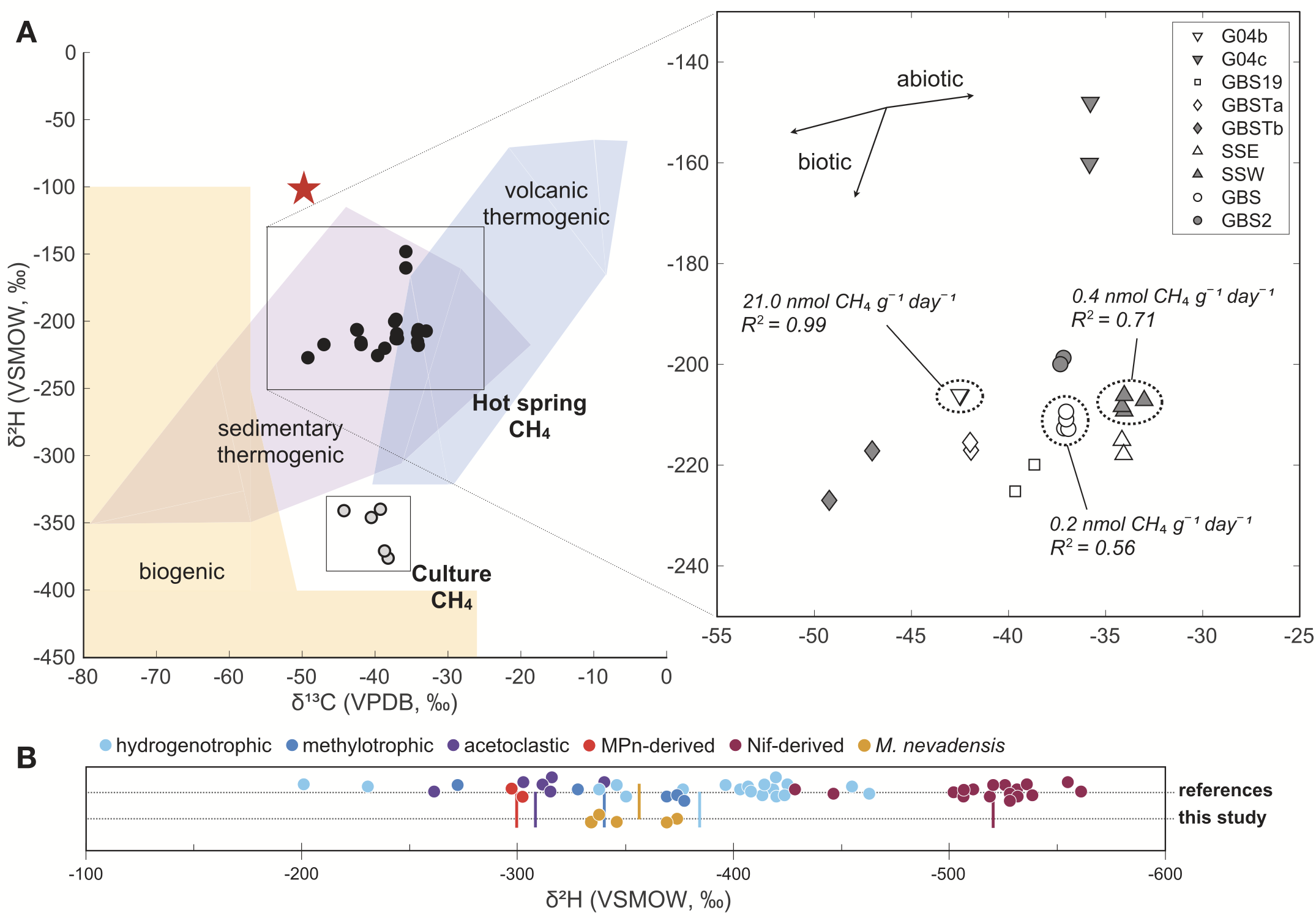
Isotopic composition of in-situ and culture methane gas (ISME Journal, 2023).
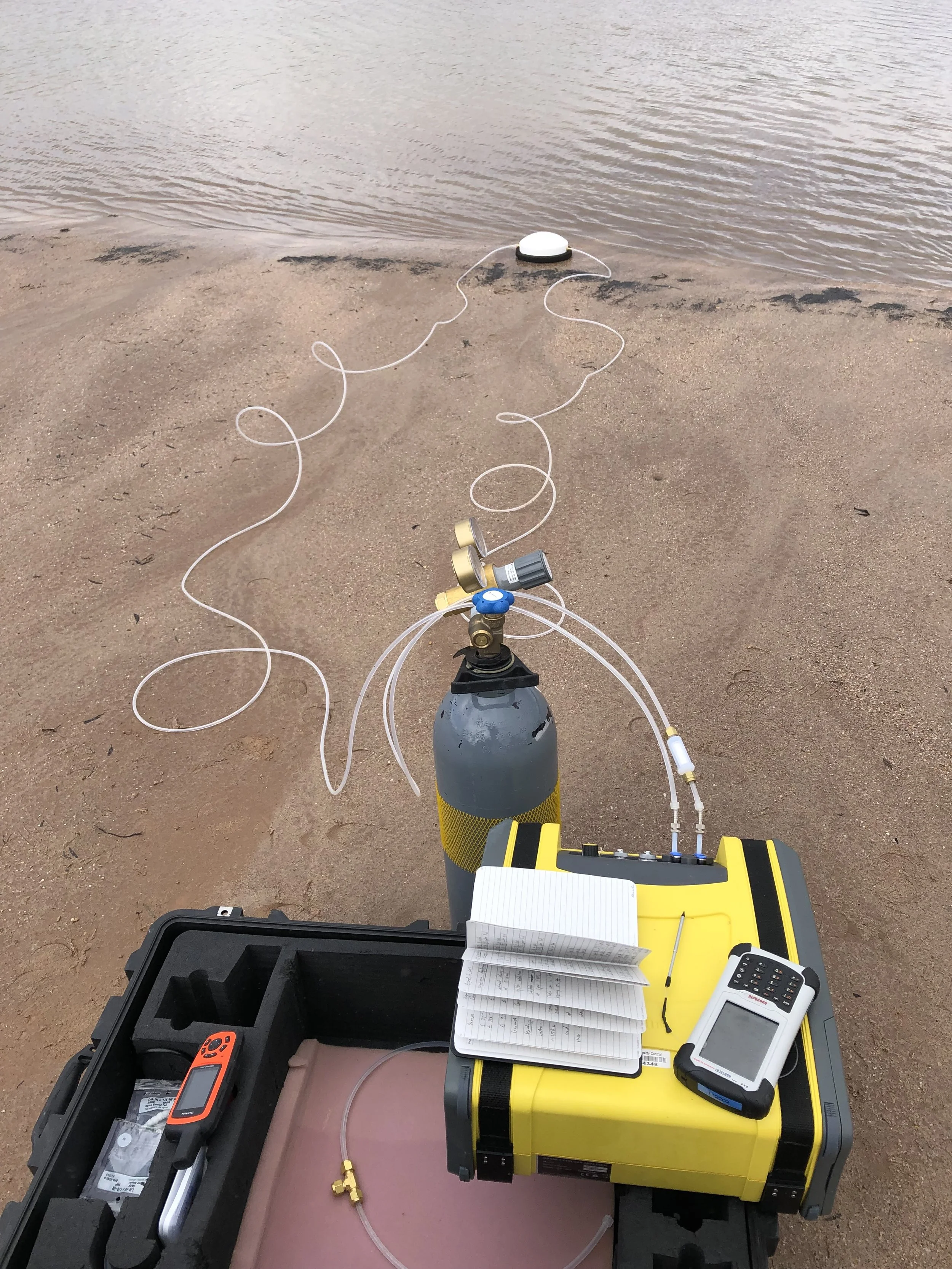
Gas flux measurements from hypersaline sediment using a portable FTIR analyzer.
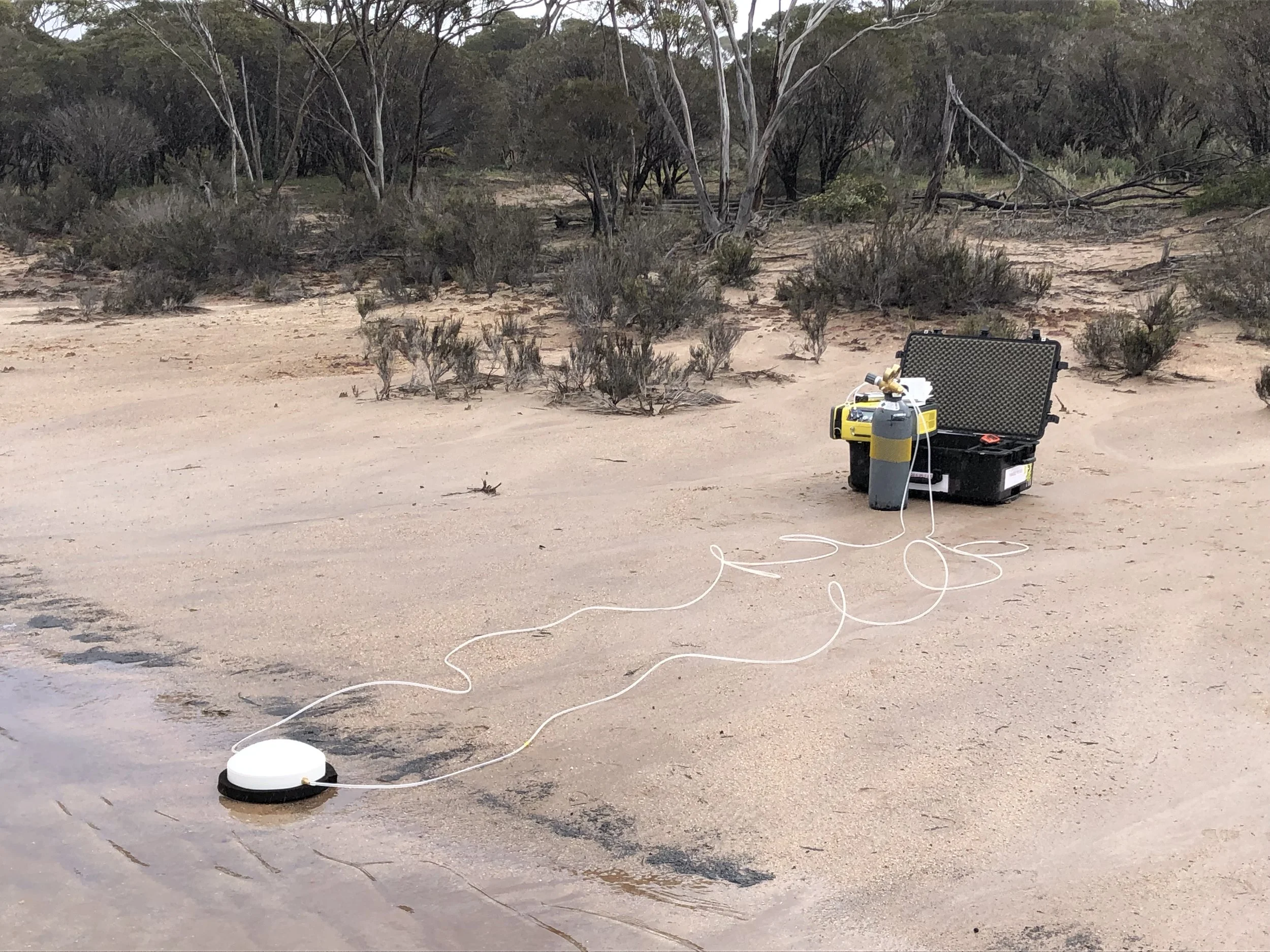
Gas flux measurements from hypersaline sediment using a portable FTIR analyzer.
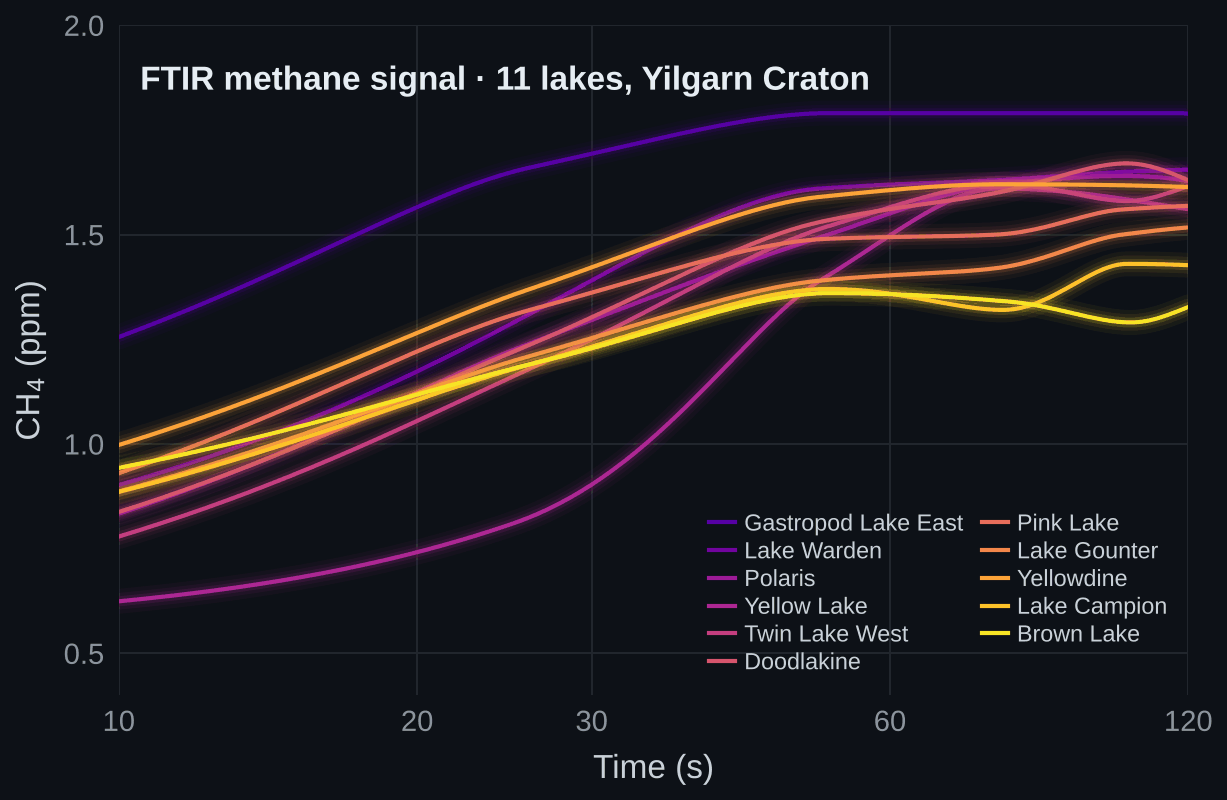
Methane gas signatures derived with FTIR in the field (publication forthcoming).
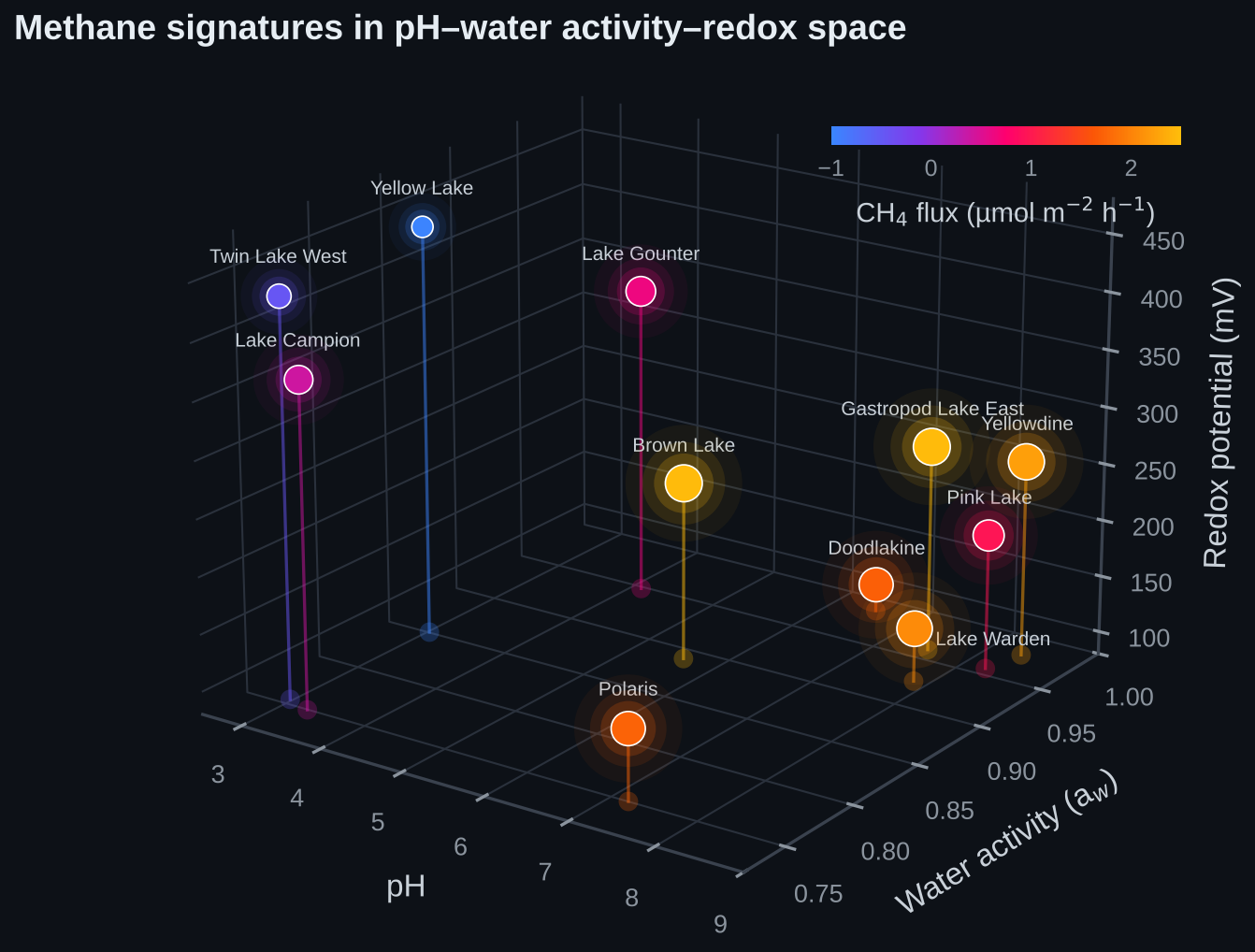
Methane gas signatures derived with FTIR in the field (publication forthcoming).